
XLIM Portraits #2 – CYRIL GUINES
DESIGN ENGINEER IN MICROELECTRONICS
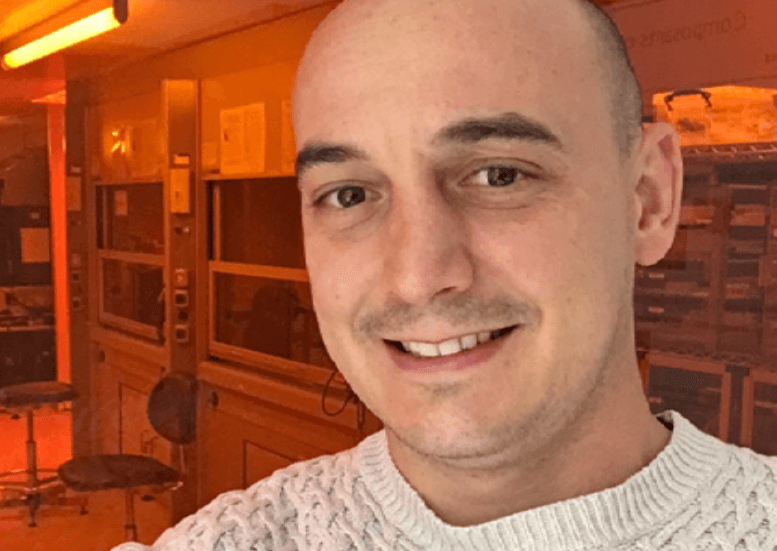
At the heart of the laboratory’s activities and of the two platforms PLATINOM and PREMISS, design engineers work daily to support researchers in their research. Meet Cyril Guines, Design Engineer in microelectronics processes and head of the “Printed Electronics Circuit Technology” area within the PLATINOM platform.
WHAT HAS BEEN YOUR CAREER PATH?
Cyril Guines : Having obtained in 2008 a DUT in Physical Measurements at the Institut Universitaire de Technologies of Limoges, I then completed a professional bachelor’s degree in “Radio-Frequency and optical systems for telecommunications” at the Faculty of Science and Technology of Limoges. At the end of this programme, which finished in July 2009, I wished to move towards the professional world. In November 2009, I was thus recruited as an assistant engineer at the XLIM laboratory for the MINACOM research team (today MINT) on the development of multilayers and the doping of thin-film materials by laser ablation. Gradually, my skills and activities diversified through the various needs of the XLIM laboratory and in particular the clean room activities. I thus had the opportunity to develop, with my colleagues, strong expertise on numerous research equipment, which gave me the opportunity to gradually take over the daily management of the clean room equipment and then of the “Printed Electronics” laboratory during the restructuring of PLATINOM in 2019. Today, I am head of the “Printed Electronics Circuit Technology” area within the PLATINOM platform, in which I lead and coordinate the daily activities of two technician colleagues.
CAN YOU TELL US MORE ABOUT YOUR ACTIVITIES AS A DESIGN ENGINEER AND HEAD OF THE “PRINTED ELECTRONICS CIRCUIT TECHNOLOGY”
AREA?
Cyril Guines: The “Printed Electronics Circuit Technology” area brings together a set of technological resources around micro- and nanotechnology activities in the clean room, organic optoelectronics and printed electronics, whose research themes cover microfluidics, filtering, antennas, RF MEMS, innovative materials (PCM…), photovoltaic cells, sensors, etc. for varied applications corresponding to the fields of microwaves, optics, Terahertz, biology, etc.
My days are paced by the daily management of these two spaces, supporting my colleagues in monitoring consumables, equipment maintenance, budget management, monitoring the application of health and safety rules, training staff on the protocols for using technological equipment, etc. In addition, my mission is to support research by developing fabrication processes for various components and circuits with the laboratory’s researchers, but also for and/or with industrial partners under agreements or external services. I also work in interaction with the RENATECH+ network. This French academic network of cutting-edge equipment in the field of micro- and nanotechnologies, led by the CNRS, allows me to exchange with colleagues on various thematic subjects but also, through LAAS-CNRS, to respond to requests from industry and/or academia. Indeed, LAAS, a member of the RENATECH network, coordinates the GSO tech network, which brings together regional technological platforms of the Greater South-West. When a feasibility request for a service is made via this network, the know-how of the nearby facilities is called upon if available, which offers a unique development potential serving research. My role is then to respond to this request and to propose a complete service when the case arises. The RENATECH+ network is also very active and events are regularly organised that make it possible to become better known in the network, to exchange on problem solving, and to share know-how. Finally, I take part in the purchase of new equipment and the renewal of existing equipment.
WHAT IS YOUR ROLE WHEN ACQUIRING NEW EQUIPMENT?
Cyril Guines: My role is to identify the need in collaboration with the researchers, to help them define it and then to draw up a specification. Once the specification is well established, depending on the amount of the operation, we must either consult several suppliers or issue a call for tenders, the specific procedure for which is managed by the procurement department of the University of Limoges. At the end of these calls, my role is to study the responses received and rank them according to precise criteria formalised in a document in which we assess technical value, prices, etc. This work is often long and tedious in order to assess the best proposal, since the number of candidates can be large and many parameters can come into play (after-sales service, specific criteria…). Once the supplier has been selected, my work continues with the final technical adjustments. Then, with my colleagues, we prepare for the reception of the equipment, in particular the associated utilities, and once the equipment is properly installed, we are trained by the supplier. Then we carry out the first tests to start developing technological processes and finally train the other users and make them autonomous on the equipment. Last year, I thus worked on the acquisition of a multifunction 375 nm UV laser lithography system, and today other major equipment purchases are under way.
HOW DO YOU WORK DAY TO DAY WITH YOUR RESEARCHER COLLEAGUES?
Cyril Guines: In very close interaction! In practice I do not spend a day without collaborating with researchers. We regularly and collectively discuss improvements to how the service operates and activities related to research projects in progress meetings. In general, these exchanges are at the heart of my job and are also what makes it so stimulating. The aim is to make myself available to them, so that they can concentrate on their research activities, to bring them my expertise in developing technological processes and to train them on the various research equipment. My role is also to support them beyond the skills and equipment we have in-house and to call on the RENATECH+ network to draw on the expertise of other platforms.
HOW DO YOU COLLABORATE WITH THE INDUSTRIAL PARTNERS FOR WHOM PLATINOM PROVIDES SERVICES?
Cyril Guines: With my colleagues, we dedicate part of our working time to services for industrial partners. I work for example in collaboration with Airmems, Novae, the CEA… In addition, as explained earlier, our know-how can be called upon via the RENATECH+ network. Some collaborations are even daily and are based on agreements. We support them, day to day, on R&D technological process aspects at their request.